Bilad sa iba: Ungoverned land, where Muslims live under non-Muslims rule, such Muslims should be summoned to pay homage or bay a to a lawful emir and if they refuse a Jihad can be waged against them.
• • Mujahaddid: Reformer who appears at the beginning of each century.
• Madhi: Messaiah, who comes at the end to set up the Utopian global Calipaht, Umma.
• • Tajdid: Reformist activist
• • Nask (abrogation): Classical Muslim thought is reconciled via conflicting texts. From tolerant against non Muslims to be non tolerant against Muslims.
• • Fi Sabil Allah: fighting in the service of Allah.
• • Dar Ul Islam: Land of Islam (or governed territory)
• • Dar Ul Harb: Land of other or ungoverned
Methods:
• Jihad bi al-nafs: is the greater against one’s sinful inclinations.
• Jihad bi al-sayf: Jihad of the sword
• Jihad al-qawl: Preaching of the tongue
• In mainstream Sunni doctrine, Jihad is understood as military Jihad.
• The earlier more peaceful Meccan verse is overrun by the later Median verse by the doctrine of Naskh or abrogation.
• Only an Emir can declare a legitimate Jihad.
• An Emir is the representative of the Caliph in the local area.
• Not all of the raiding of Islamists in Africa can be called Jihad. For example, in History: 11th century
• Yes, the statement is correct: starting in the 1140s, culminating with the fall of the Almoravid capital Marrakech in 1147,
• The Sanhaja Almoravid dynasties were overthrown by the Muwahhidun of the Znaga.
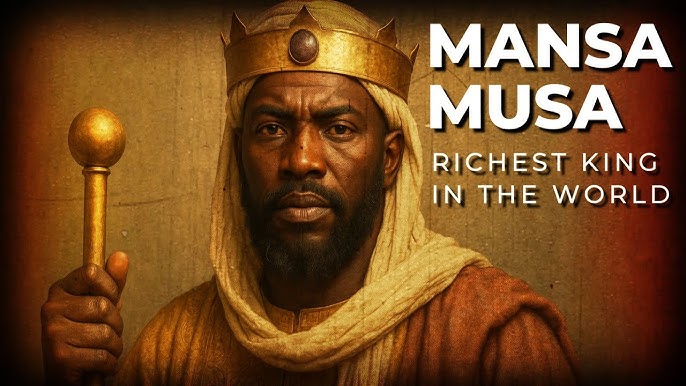
• 1312; Mansa Musa of Mali is said to have performed an ostentatious pilgrimage to Mecca.
• They raided and fought wars, but one cannot call it Jihad (Azumah).
• 1062: The Murabitun (Almoravids) were a powerful Berber Muslim dynasty (c.) originating from the Sahara, who established a vast empire in Morocco, Western Sahara, Algeria, and Al-Andalus who conducted raids in the “shores” of the Sanhajas who triumphed over the Sudanese plundered their territories, imposed tribute and poll tax, and forced many of them to join Islam (Ibn Khaldun, The Muquadimmah).
• 1140: The Almoravid dynasty, a Sanhaja Berber group, was overthrown by the Muwahhidun (Almohads), another Berber movement, establishing the Almohad Caliphate as the new power in North Africa.
• 1312-37: The Mansas (rulers) of Mali regarded themselves as Muslims and Mansa Musa performed the hajj to Mecca , he conducted raids and fought wars, but his raids cannot be called Jihad.
• Mid 15th century: Songhay eclipsed Mali and Sonni Ali came to power.
• He was ambivalent about his faith and the fact that he is a non- Arab.
• Sonni Ali did not impose Islam as a State policy.
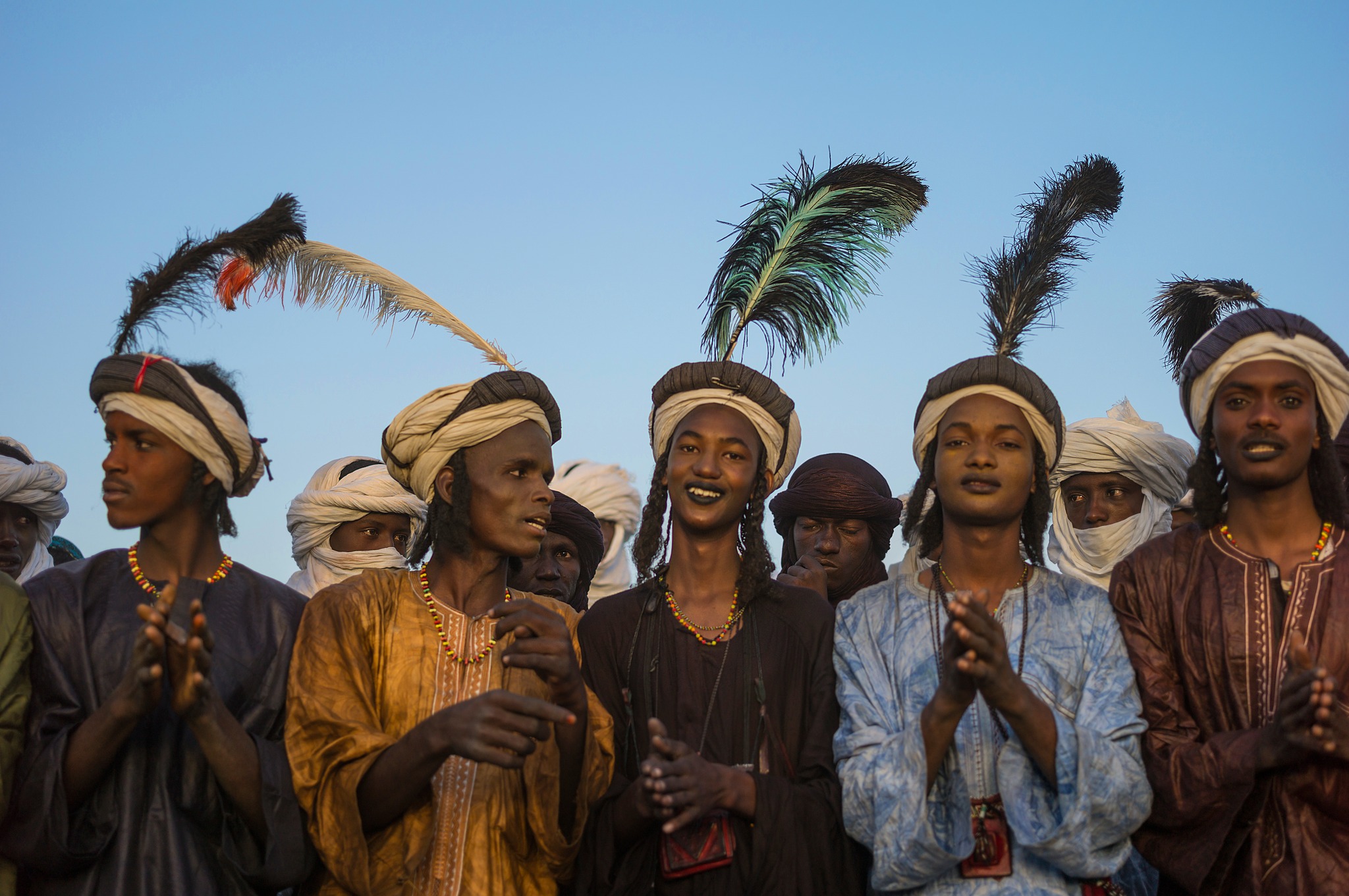
• The Maghsharan Tuareg refer to groups of nomadic Berber people, known as the “Blue Men of the Sahara,” inhabiting the vast Sahara and Sahel regions (Mali, Niger, Algeria, Libya, Burkina Faso), famed for their distinctive indigo-dyed veils (worn by men), matriarchal traditions, deep knowledge of the desert, and historical control over trans-Saharan trade routes, though modernization and drought are shifting them towards more sedentary lifestyles.
• April 2012: Tuareg rebels captured the ancient city of Timbuktu as part of an offensive that took advantage of a military coup in Mali’s capital. The city was a key objective in their fight for an independent homeland they call Azawad in northern Mali.
• 1433: Muslim leaders in Timbuktu, seeking liberation from Tuareg rule (who had held the city since 1433), requested Sonni Ali’s help.
• 1468: Sonni Ali conquered the Tauregs by conquering Timbaktu.
• He was harsh in his treatment of the Sanhaja Muslims of Timbaktu.
• 1493: Muhammed Ture or Akshiya Muhammed “Sonninke” was not a native of Songhay, overthrew Sonni Ali.
• He showed appeasement towards the Muslims, employed them, especially the Divines Sufis who visited and the immigrant Muslim community in Timbaktu.
During this time the Islamization happened.
• Ashkiya M. went to Mecca and received an insignia from the Khalipha in Cairo who appointed him the EMIR of “the lands of Takrur”.
• 1505: Abd al-Karim al –Magahli a Tunisian jurist.
• Ashkiya M. came in touch with him and the latter inspired him to do Jihad.
• Al-Maghali declared that every believer must be severe against non believers.
• The Since the Ulemas in Tuwait did not support his militancy, he moved further down to Sudan.
• In Sudan is was canonized as an authoritative alim and reformer and imbued with baraka, whose name in their Silsila became very desirable.
• 1502: Al-Maghali set out for Kano in present day northern Nigeria, whose ruler Muhammad Rumfa he met and finally came in touch with Askiya Muhammed.
• He taught Askiya Muhammed about government, scholars, state, tajdid or religious reform and theories of Jihad.
As Akshiya did not know Arabic, so Al-Maghali took over.
• Don Fedio gained much influence in the Hausa Ruling Class of Gobir (present day Northern Nigeria).
• 1794: Don Fedio claimed to have a dream in which the Prophet of Islam and Abd al-Qadir al –Jilani founder of the Qadiriyya Sufi order dressed and enturbaned him as “Imam of the saints” and gave him the “sword of truth” (sayf al-haqq) to declare war against “the enemies of God” (infidels, pagans of Gobir).
• He claimed himself as a Mujahaddid and was heralding the coming of the Mahdi.
• 1794-1801: Nafata, ruler of gobir, banned all public preaching except that was done by Don Fedio.
• Turbans and veils were banned and people who converted were asked to convert back to the religion of their ancestors.
• 1800: Was the tutor of Yunufa, royal prince of Gobir.
• 1801: and Don Fedio’s help Yunufa gained the throne of Gobir.
• 1804: Don Fedio went to a Hijra in the nearby village called Gudu (underground), Yunufa attacked and was defeated.
• Don Fedio toured Gobir and got followers.
• 1817: Uthman Don Fodio Fulbe cleric launched a Jihad in Hausaland, he died and the campaign was carried on by Muhammad Bello and his brother Abdullahi Dan Fedio, although some Ulemas were against this Jihad.
• Yunufa called on hausa rulers like Katsina, Kano, Zegzeg, Dawra, and Ahir, but the Fulani Jihad groups gathered and defeated them and a Caliphat in Sokoto was established.
• The Emir was a Muslims, so even if the majority subjects were infidels, it was a Dar Ul Islam.
• Dan Fedio brought charges of corruption, imposition of non canonical taxes.
• Dan Fedio imposed the hijab, hudad, stoning to death, Islamic commercial laws, and banned all practice of drumming and music.